
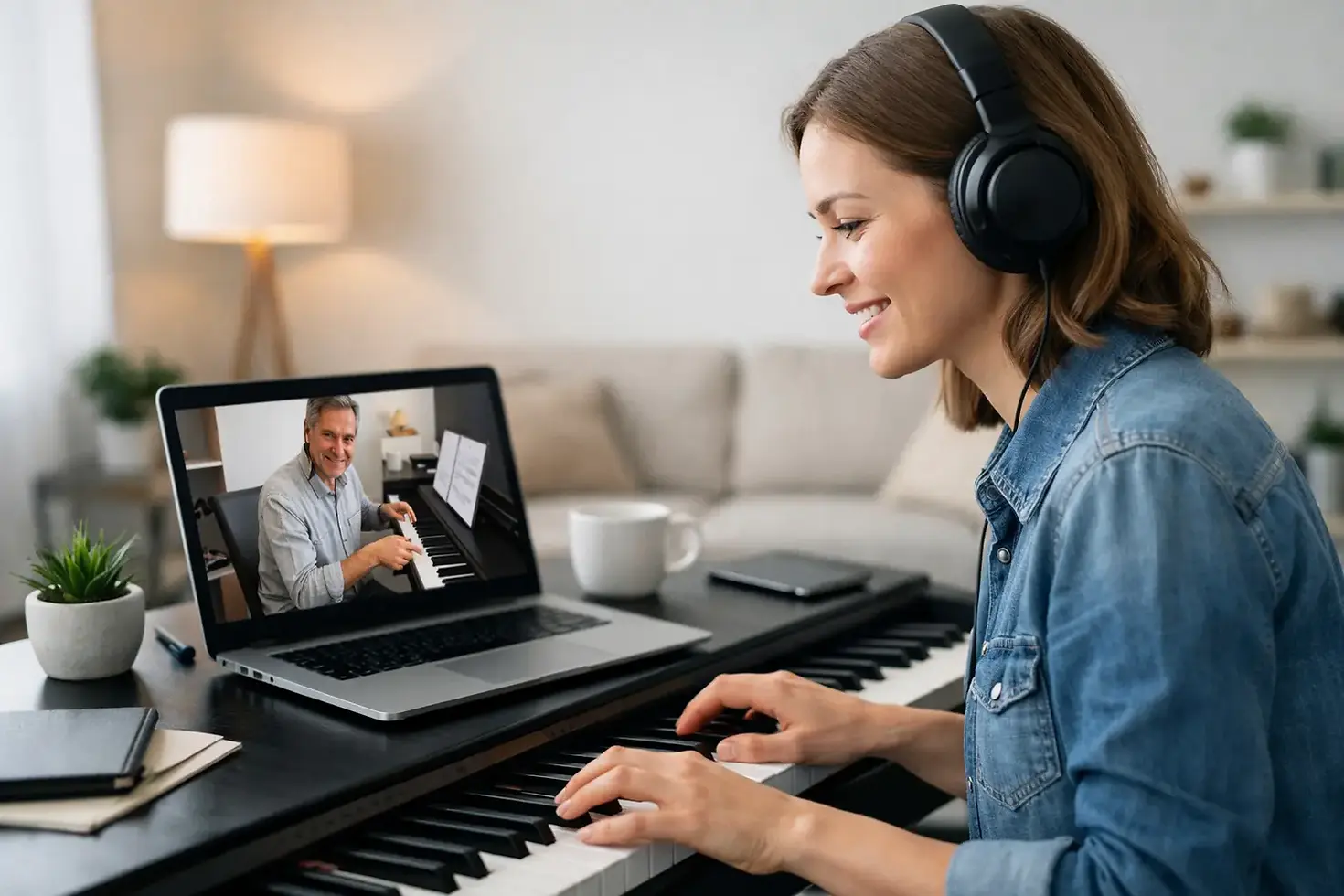
Virtual Piano Instruction That Fits Your Life
A child may be eager to play the theme from a favorite movie. A busy adult may finally have time to return to the piano after years away. A teen may want to write songs, record tracks, or build stronger technique for school music. Virtual piano instruction creates room for each of these goals without asking students to fit one fixed lesson plan.
Learning online is not simply an in-person piano lesson viewed through a screen. When it is thoughtfully taught, it is a personal musical conversation: a teacher listens, demonstrates, notices progress, adjusts the next step, and helps the student feel capable of continuing between lessons. For families and adult learners who need flexibility without giving up meaningful guidance, that difference matters.
What Virtual Piano Instruction Can Offer
The strongest online lessons begin with the student, not a preset curriculum. A complete beginner needs a welcoming introduction to the keyboard, rhythm, hand position, and reading music. A returning player may need help rebuilding coordination and confidence. An experienced student might want to refine interpretation, prepare an audition, learn contemporary chords, or develop original compositions.
Virtual lessons can support classical foundations and contemporary interests side by side. Students may work on note reading and technique while also learning a song they genuinely want to play. That balance keeps lessons purposeful. Fundamentals give students freedom, while favorite music gives them a reason to keep practicing.
Online learning also makes consistency more realistic. There is no drive across town, no need to rush through bad weather, and fewer barriers when a family schedule changes. Students can learn from a familiar space and still receive individual feedback from a teacher who understands their goals.
Of course, convenience is not the only reason to choose an online format. Some students focus especially well at home, while others benefit from the structure of traveling to a lesson. The best choice depends on the learner, the home environment, and the kind of support that helps them stay engaged. For many students, virtual instruction is a flexible and effective fit. For others, in-person lessons may remain the better option.
What a Virtual Piano Lesson Looks Like
A good lesson has a clear direction, but it should not feel rigid. The teacher may begin by asking how practice went, listening to a piece in progress, and identifying one or two areas to improve. From there, the lesson can include new repertoire, rhythm work, reading skills, technical exercises, ear training, or creative work such as composing and recording.
Because the teacher can see and hear the student in real time, feedback is immediate. A teacher might demonstrate a relaxed wrist motion, clap a difficult rhythm, point out an overlooked dynamic marking, or help a student choose a more efficient fingering. Students can ask questions as they arise instead of guessing their way through a challenge alone.
The screen can also be useful in practical ways. Music can be shared clearly, sections can be marked together, and teachers can use visual examples to explain patterns on the keyboard. Still, technology should serve the lesson rather than take it over. The heart of instruction is attentive teaching and a plan that makes sense for the individual student.
A Simple Setup Is Usually Enough
Students do not need an elaborate home studio to begin. A piano or keyboard, a reliable internet connection, and a device with a camera and microphone are the essentials. A full-size keyboard is helpful as students advance, but beginners can make a meaningful start on many smaller instruments.
Camera placement matters more than perfection. Ideally, the teacher should be able to see the student’s face, hands, and part of the keyboard. Clear sound is valuable too, but families do not need to purchase expensive equipment before discovering whether lessons are a good fit. Starting with what is available is often the right first step.
A quiet corner and a regular lesson time can make a big difference. When the piano is accessible and music is organized nearby, short practice sessions become easier to begin. Progress rarely comes from one long session once a week. It grows through small, repeated moments at the keys.
Building Confidence Between Lessons
One concern parents and adult learners sometimes have is accountability. Will a student practice when the teacher is not in the room? The answer depends less on lesson format than on having clear expectations and achievable goals.
A customized practice plan helps students know exactly what to do. Rather than being told simply to “practice more,” they may be asked to play four measures slowly with steady counting, review a chord pattern, listen for a particular balance between hands, or spend ten minutes exploring a melody they enjoy. Specific instructions make practice feel manageable.
For young students, encouragement from a parent or caregiver can be especially helpful. This does not mean becoming the music teacher at home. A gentle reminder, a protected practice time, and interest in a child’s newest song can be enough. Celebrate effort as well as results. A child who learns to restart after a mistake is building a skill that reaches far beyond piano.
Adults benefit from the same kindness toward themselves. Returning to music can bring joy, but it can also bring frustration when hands do not respond as quickly as expected. Steady progress is more valuable than comparing today’s playing with a memory from years ago. A supportive teacher can help adult students set realistic goals while keeping the experience rewarding.
Choosing Instruction That Matches Your Goals
Before beginning, consider what you want music to add to your life. Do you want your child to gain confidence and a strong foundation? Are you interested in playing classical repertoire, pop songs, worship music, jazz-influenced chords, or your own compositions? Would you rather follow a structured path, or combine skill-building with creative exploration?
The answers guide the lesson plan. There is no single correct musical path. Some students thrive on weekly challenges and measurable milestones. Others need a slower pace, more repetition, or the freedom to follow a changing interest. A teacher should be able to meet students where they are while still offering enough structure for real growth.
It is also worth considering communication. Younger children may need brief, clear assignments and regular parent updates. Teens often respond well when their musical tastes are respected and included. Adults may appreciate an organized approach that fits around work, family, and other commitments. Personalized instruction recognizes that age, experience, and motivation shape the learning process.
At Studio One Music Lessons, virtual piano students can receive this kind of individual attention while exploring the styles and skills that matter most to them. Whether the goal is first notes, stronger technique, songwriting, or a return to a longtime interest, lessons can grow with the student.
Give Progress Time to Take Root
Music learning is not a race to finish a method book or play the hardest piece possible. It is a gradual process of hearing more, understanding more, and becoming more comfortable expressing yourself. Some weeks bring noticeable breakthroughs. Other weeks are quieter, with progress appearing only after a skill has had time to settle in.
Virtual piano instruction works best when students arrive curious, teachers remain responsive, and goals stay connected to real musical enjoyment. Start with the instrument you have, make space for regular practice, and let each small success become a reason to play again.


Comments