
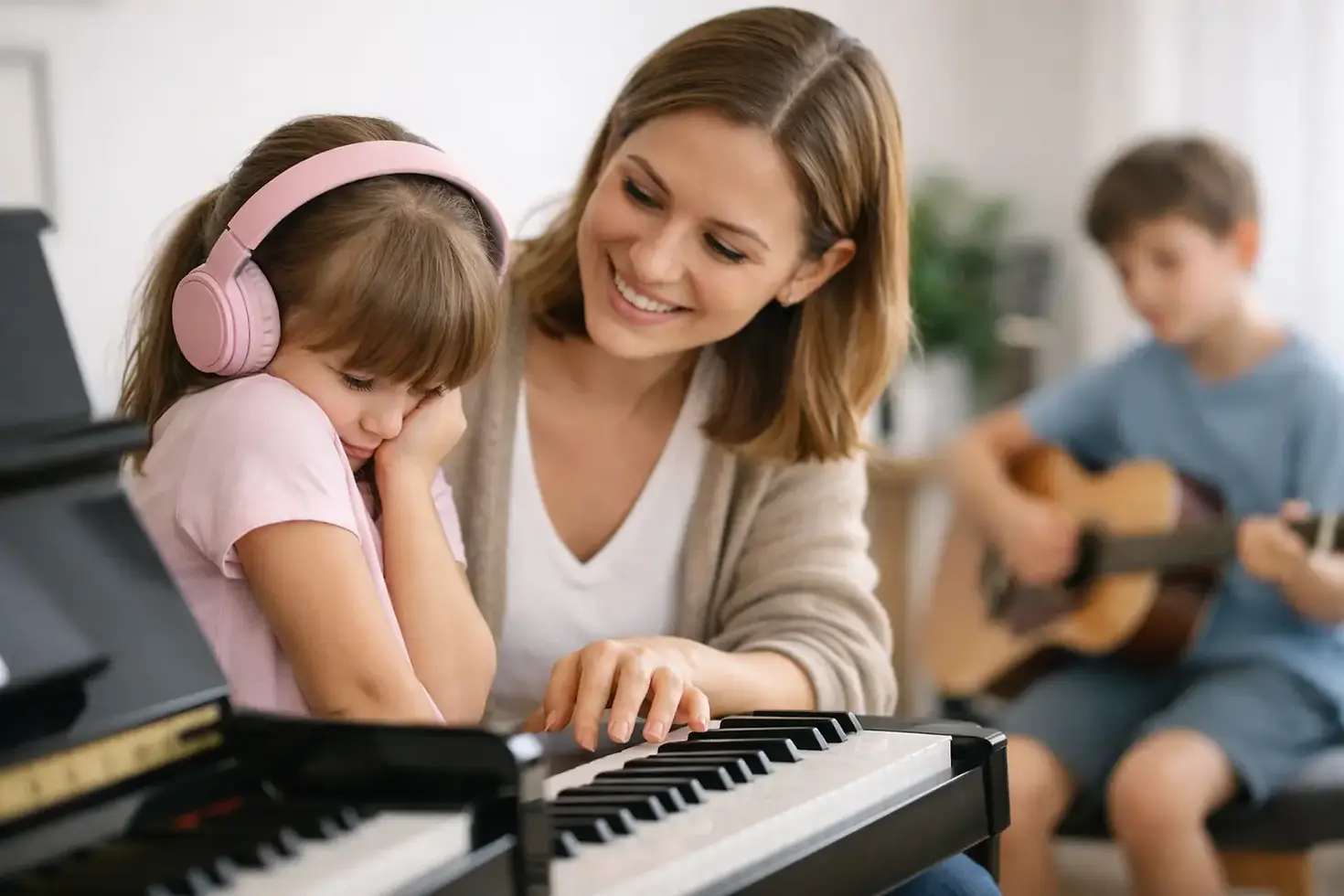
Music Lessons for Shy Children That Help
Some children hum constantly at home, tap out rhythms on the table, or stare at the piano with real curiosity - and still go quiet the moment a new teacher says hello. That hesitation does not mean they are not ready. In many cases, music lessons for shy children can be one of the best ways to help them grow in confidence, expression, and self-trust.
The key is not pushing a child to become outgoing. It is giving them a space where they can participate at their own pace, feel successful early, and build a relationship with music that feels safe and personal. For shy children, the right lesson environment matters just as much as the instrument.
Why music can be such a good fit for shy children
Shy children often notice more than people realize. They may listen carefully, think deeply, and take their time before joining in. In a noisy or fast-moving activity, that can be mistaken for reluctance. In music, those same qualities can become strengths.
Learning an instrument gives a child a structured way to communicate without having to find the right words on the spot. A simple melody, a steady beat, or a familiar song can become a form of expression that feels more comfortable than conversation. That matters, especially for children who need time before they feel ready to speak up.
Music also creates measurable progress. A child who feels unsure in social settings may feel proud when they can play a short piece with both hands, recognize a rhythm, or remember a favorite song. Those small wins build confidence in a very real way.
That said, music lessons are not automatically helpful just because a child is shy. If the teaching style is too rigid, too fast, or too performance-focused from the start, lessons can feel stressful. A child may enjoy music and still need a gentler introduction.
What shy students usually need from lessons
Shy children tend to do best when expectations are clear and the atmosphere is calm. They often respond well to routines, encouragement, and a teacher who notices progress without creating pressure around it.
One of the biggest factors is pacing. Some children are ready to chat, experiment, and play freely in the first lesson. Others need several lessons before they relax enough to show their personality. Neither response is wrong. A personalized approach allows the student to settle in rather than forcing immediate participation.
Choice also helps. When a child has some say in the music they learn, the lesson starts to feel less like a test and more like a partnership. That could mean choosing between two songs, trying piano before exploring guitar, or including music from a style they already enjoy. A child who feels heard is more likely to engage.
For many families, private lessons are the most comfortable starting point. Group programs can be wonderful, but they are not always the best first step for a hesitant child. A one-on-one format gives the student time to build trust without worrying about peers watching or waiting.
Signs that a lesson style is helping
When music lessons for shy children are working well, progress may show up quietly at first. A child might walk into the room more easily. They may answer with more than one word, ask to play a song again, or practice without being reminded. These shifts can seem small, but they often mean the child is beginning to feel secure.
You may also notice confidence spreading beyond music. Some students start making decisions more easily. Others become more comfortable making mistakes, which is a major step in learning anything new. The goal is not to change a child's personality. It is to help them feel capable within it.
A good teacher will usually recognize that confidence grows in layers. First comes comfort, then participation, then ownership. If a student is not instantly expressive, that does not mean the lesson is failing. It may simply mean trust is still being built.
How to choose music lessons for shy children
The teacher-student relationship should come first. Credentials and experience matter, but with a shy child, connection matters just as much. Look for a teacher who is patient, attentive, and comfortable adjusting the lesson to the student rather than expecting the student to adapt immediately to a fixed structure.
It also helps to ask how lessons are personalized. A customized learning plan can make a big difference for a child who needs more reassurance, more repetition, or a slower introduction to new material. Some children thrive on clear goals. Others need creative exploration mixed into the lesson. It depends on the child.
Format is another practical consideration. In-person lessons can be helpful for building rapport and comfort with the instrument, especially for younger students. Online lessons can also work very well for shy children because learning from home may reduce anxiety. Some students are noticeably more relaxed in a familiar environment. There is no single right answer here, only the setting where your child feels most able to participate.
Instrument choice matters too, but maybe not in the way parents expect. Piano is often an excellent option because it offers immediate success. A child can press a key and make a clear, pleasing sound right away. That immediate response is motivating. Guitar can be a great fit as well, especially for students drawn to contemporary music, though it may require a little more early patience because producing clean notes can take time. The best choice is usually the instrument your child feels curious about enough to return to.
What parents can do without adding pressure
Support at home makes a difference, but shy children usually respond best to quiet encouragement rather than intense monitoring. Instead of asking for a performance after every lesson, try asking what they enjoyed most. Instead of correcting mistakes during practice, notice effort and consistency.
Routine helps more than pressure. A short, regular practice time often works better than long sessions with rising frustration. Five or ten focused minutes can be enough for a beginner, especially if the goal is to make practice feel familiar and manageable.
It is also helpful to let progress unfold publicly only when the child is ready. Some children love performing for grandparents after two lessons. Others need months before they want anyone to listen. Both are normal. Confidence tends to last longer when it is invited, not rushed.
Parents sometimes worry that if a child seems quiet in lessons, they are not enjoying them. That is not always true. Many shy students process internally. They may say little during the lesson and still think about it all week. If they are willing to return, are showing gradual comfort, and have a teacher who connects with them, that is usually a good sign.
When to give it more time - and when to make a change
It is reasonable for shy children to need an adjustment period. The first few lessons may be quiet, cautious, or uneven. If the teacher is responsive and your child is slowly opening up, a little patience can go a long way.
But there is a difference between understandable nerves and a poor fit. If your child consistently feels tense before lessons, dreads attending, or seems shut down week after week with no sign of trust developing, it may be time to reassess. Sometimes the issue is not music itself. It is the teaching style, pace, or format.
A supportive studio should be able to adapt. That might mean changing lesson length, adjusting goals, shifting to online lessons, or simply approaching the student in a more conversational and encouraging way. At Studio One Music Lessons, that kind of personalization is central because every student grows differently.
The real value of starting gently
A shy child does not need to become the loudest student in the room to benefit from music. They simply need a place where they can try, listen, learn, and gradually feel more sure of themselves. Music can offer that in a way few activities do - with structure, creativity, and personal expression all working together.
Sometimes the most meaningful growth begins quietly. A child sits at the piano, plays a few notes, then a phrase, then a full song. No big speech, no dramatic moment - just a steady change from hesitation to confidence. Given the right support, that kind of progress can stay with them far beyond the lesson room.
If your child is thoughtful, reserved, or slow to warm up, that does not put music out of reach. It may be the very reason music becomes such a meaningful path.


Comments